


Blog

Why autonomous
procurement AI agents aren’t a feature – they’re a new business model
The Shift from Tools to Autonomous Systems Let’s figure
out – software has evolved through three major
The Shift from Tools to Autonomous Systems
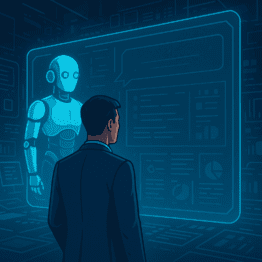
Let’s figure out – software has evolved through three major eras. First came automation, where digital tools replaced repetitive manual actions. Then came intelligence: algorithms that could recommend, predict, and optimize. In 2020s, we’re entering the third stage—autonomy—where systems can act, decide, and negotiate on our behalf.
This article is for business leaders, procurement teams, founders, and anyone building or adopting AI-powered systems. Its purpose is simple: to explain why autonomous AI agents should not be viewed as “just another feature” in an existing product, but as the core of a completely new business model.
Features Automate Tasks. Agents Own Outcomes.
Let’s take a look at how traditional software speeds up a predefined workflow. It helps you process a request, generate a document, or follow a checklist. Even modern AI features usually stay within those boundaries – they draft messages, summarize data, or highlight insights. This is already standadr for today.
Autonomous AI agents work differently. They don’t optimize a step. They take ownership of the entire workflow.
Autonomous agents can:
- manage the process from beginning to end,
- analyze context and make independent decisions,
- communicate and negotiate with third parties,
- execute tasks without supervision, and learn from every interaction.
This shift from task automation to outcome ownership is what makes autonomy fundamentally transformative. But of course, they still require strong input and well-managed controllers.
Why Autonomy Redefines the Economics of a Business
Agents behave like digital employees
An autonomous agent doesn’t “support” a procurement manager – it acts like one. Let’s have a look at this example. It handles negotiation threads at 2 a.m., manages supplier communication, prepares proposals, and ensures deadlines are met. The cost of such capability is no longer comparable to a software license. It is comparable to hiring a full-time specialist.
Agents create a new type of operational leverage
One agent can negotiate with dozens suppliers in parallel with perfect consistency. It doesn’t get tired, make calculation mistakes, or forget follow-ups. As a result, companies can scale operational capacity without scaling payroll. For SMEs, this means accessing a level of efficiency that previously belonged only to large enterprises.
Autonomy Creates a New Business Model
From SaaS to “AI Workforce-as-a-Service”
In the autonomy era, buyers no longer purchase: a module, a dashboard, or a set of buttons.
They buy a software robot powered by AI – a digital procurement team. The value lies in the agent’s actions, not in the interface.
Engagement shifts from UI to conversation
With autonomy, users don’t “use” the product anymore – they simply talk to it. Interfaces fade, workflows disappear, and the orchestrator becomes the single touchpoint. The software runs in the background, invisible but powerful.
This is example: “We need to purchase 50 air-conditioning units for the building currently under development. Installation and ongoing service must be included in the offer. Delivery should align with construction phase 3, planned for the second half of Q3. Target price per unit is around $150. Also, please arrange a bank credit request to cover this investment.”
Why This Matters: Strategic, Not Technical
Agents change how companies operate Procurement moves from being event-driven – launching RFQs only when needed to being continuous. The system constantly monitors opportunities, tracks risks, evaluates alternatives, and triggers negotiations autonomously. Agents change competitive advantage Companies adopting autonomous procurement gain a structural advantage. Their sourcing cycles are up to 20× faster, and they can instantly respond to disruptions or cost fluctuations. Traditional teams simply can’t match this pace. The competitive gap becomes not tactical, but fundamental. Agents change the software industry Autonomy will force a complete redesign of how enterprise tools are built. In the next five years, workflow-heavy SaaS tools will either be rebuilt around autonomous logic or replaced. Early movers will define the standards, including how AI agents negotiate with each other and how outcomes are validated and trusted.
The Age of Autonomous Enterprises
Autonomous AI agents are not features. They represent a new operational model – one where companies run faster, leaner, and with greater intelligence than human-only teams allow.
Organizations that adopt autonomous procurement early will operate on a different playing field. They will have teams that never sleep, never forget, and always negotiate at their best. Those who wait will compete against enterprises powered by tireless digital specialists.
The shift has already begun. The question is not whether autonomy will change the market, but how quickly businesses will embrace it.